Anti-Antibiotic Resistance: Balancing Patient and Public Health in Antibiotic Prescriptions

What if antibiotics could no longer eliminate bacterial infections, or prevent them from being contracted during surgeries? Due to the current rate at which we are using (and misusing) antibiotics, this terrifying scenario might become a reality. Antibiotic resistance is rising and spreading rapidly worldwide, jeopardizing healthcare as we know it, while research and innovation lags behind. Consequently, it becomes increasingly critical to re-examine our antibiotic prescribing practices in order to determine how we can minimize the progression of this public health crisis. Could individuals someday need to make sacrifices in their medical care to avoid using antibiotics? This paper will analyze the delicate balance that must be struck between individual patient care and public health in each decision about whether or not to prescribe antibiotics, as well as in the consideration of antibiotics as a distributed resource that is limited in efficacy.
Table of Contents
Introduction
Scientific Background
The Biology of Resistance
The Innovation Standstill
A Public Health Crisis
Overprescription
Defining Inappropriate Prescription
Patient-Centered Ethics
External Strains on Physician Ethics
Individual-Scale Ethics: Beneficence and Nonmaleficence
Introduction
Medical Benefits
Medical Harms
Balancing Beneficence and Nonmaleficence
Logistical Benefits
Logistical Harms
The Distortion of Beneficence and Non-maleficence
Population-Scale Ethics: Distributive Justice
Antibiotics as a Scarce Resource
Conclusion
Introduction
Until the early 20th century, bacterial infections were both rampant and deadly. In fact, the three leading causes of death in 1900 – pneumonia, tuberculosis, and diarrhea – were often bacterial infections, with tuberculosis being exclusively bacterial (Yee et al.). Thus, the 1928 discovery of penicillin, which is widely considered the world’s first true antibiotic, was revolutionary, offering the world’s first means to eliminate these dangerous infections without harming human cells (“The History of Antibiotics”).
This so-called ‘miracle drug’ made high fatality rates from common bacterial infections a thing of the past. By the 1940s, penicillin had found widespread commercial success, ushering in a “Golden Era” of novel antibiotic discovery during the subsequent three decades (Aminov). Antibiotics became a cornerstone of healthcare, used not only to treat active infections, but to prevent them from being contracted during medical procedures, including organ transplants, C-sections, and chemotherapy (Howard).
In the present day, antibiotics have become too popular to the point of overuse. In the United States, 1 in 3 antibiotic prescriptions are unnecessary, amounting to tens of millions of prescriptions each year ("Antibiotic overuse"). Oftentimes, these prescriptions are facilitated by external pressures on prescribers, like the demands of patients or constraints of healthcare systems.
This widespread overuse accelerates a dangerous phenomenon: antibiotic resistance. Bacteria naturally develop resistance to the drugs used against them. Many antibiotics, including penicillin, have already become significantly less effective in eliminating certain infections (Lobanovska et al.). In 2023, 1 in 6 laboratory-confirmed bacterial infections were resistant to antibiotic treatments, resulting in 1.2 million annual deaths worldwide and contributing to an additional 5 million (Howard). If antibiotic resistance continues to grow unchecked, and if new antibiotics are not developed to replace those that are becoming obsolete, the world risks a return of the pre-antibiotic age in which routine infections were lethal, and medical procedures carried tremendous risk of infection-related death (Giuffrida).

Alexander Fleming, the inventor of penicillin, warned of antibiotic resistance as early as 1945. In his Nobel Prize acceptance speech, he presented a hypothetical scenario in which Mr. X takes penicillin to remedy his strep throat. However, he fails to take enough to completely eradicate the Streptococcus bacteria in his throat, instead enabling the bacteria to adapt to the drug. He then infects his wife, Mrs. X, whose strep throat progresses into pneumonia when the Streptococcus bacteria spreads to her lungs. Mrs. X is treated with penicillin, but because Mr. X’s nonlethal dosage made the bacteria resistant, Mrs. X’s pneumonia does not respond to the treatment. Ultimately, Mrs. X succumbs to her infection and dies (Fleming).
While this scenario describes antibiotics being used incorrectly, not unnecessarily, Fleming’s point stands nonetheless: the inadequately supervised, suboptimal use of antibiotics can have disastrous consequences. Even necessary antibiotics used correctly can contribute to resistance. Since every exposure of bacteria to antibiotics is an opportunity to build resistance, every prescription can contribute to this accelerating crisis. It is tempting to assume that one instance of inappropriate prescribing or inadequate treatment is inconsequential, especially since it is difficult to track one instance’s impact on global resistance. However, research shows that these individual instances are accumulating at a disturbing pace that is accelerating resistance faster than we can combat it.
Antibiotics are the only medications that lose effectiveness for the public due to consumption by individuals, putting individual patient well-being and societal protection at odds (Smith et al.). While it may be in the best interest for society to minimize antibiotic use in order to minimize resistance and thereby maximize future efficacy, the best interest for an individual’s health may be to receive an antibiotic. Due to this unique characteristic, every antibiotic prescription decision must consider not only the patient’s interests, but societal interests as well. While professional guidelines exist to aid in these decisions, ultimately, the major responsibility of deciding whether patient or societal needs take priority falls on the prescribing physicians themselves (1).
(1) For the sake of scope and simplicity, other healthcare professionals with the power to prescribe, as well as non-prescription methods of obtaining antibiotics, will not be explored. Although the discussion regarding physician duties is based on oaths and codes of ethics created specifically for physicians, many of the core ideas and principles can be similarly extrapolated to all healthcare professionals with prescribing authority.
My primary focus will be on prescriptions given in outpatient centers in the United States, where 85-95% of the nation’s human antibiotic use occurs ("Antibiotic Use in the United States"). Since the infections for which antibiotics are given to patients in outpatient settings are less critical than those in hospital settings, public health considerations can have greater weight in decision-making because the patient’s life is not urgently at risk (2).
(2) While the use of antibiotics in agriculture to prevent and control infections in livestock and crops is also a significant contributor to antibiotic resistance in the United States, it will not be discussed in this paper.
In this paper, I will take two approaches to balancing individual patient need for antibiotics with the interest of minimizing antibiotic resistance. First, I will analyze physician decision-making using the bioethical principles of beneficence and nonmaleficence, to take the case-by-case approach used by prescribers. Second, I will utilize the bioethical principle of justice, specifically distributive justice, to frame antibiotic prescription in a more public health-minded light – as a matter of distribution rather than as a matter of an individual’s medical care. The fusion of these two approaches will allow me to draw a conclusion about the most ethical way to manage antibiotic use, that equitably and thoroughly considers both the individual and public health stakes.
Scientific Background
The Biology of Resistance
In order to explore how antibiotic resistance can be minimized, it is critical to understand the scientific foundation underlying how and why it occurs. Antibiotic resistance is a natural evolutionary process that is accelerated with each exposure of bacteria to antibiotics, whether through appropriate or inappropriate use ("Antibiotic Resistance"). Disease-causing bacteria can become resistant via genetic mutation or horizontal gene transfer, in which they acquire resistance genes from small, mobile pieces of DNA called plasmids, that are transferred from other resistant bacteria (Huddleston et al.). Even harmless bacteria that naturally live in the human gut microbiome can possess and transfer resistance genes to pathogenic bacteria (Crits-Christoph et al.).
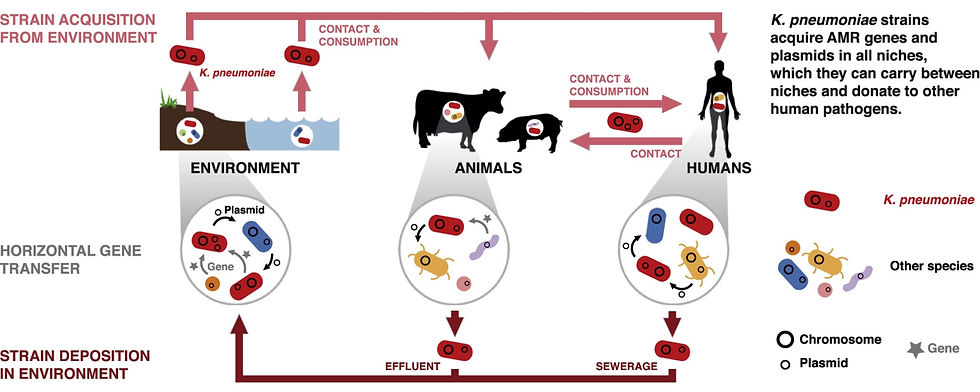
The consumption of antibiotics can make this outcome more likely by essentially giving an evolutionary advantage to resistant organisms, thereby “selecting” them to survive and proliferate while nonresistant organisms do not. As a result, the concentration of resistant bacteria in the gut bacteria grows, increasing the probability that a resistant organism can interact with and spread its DNA to nonresistant, infective bacteria (Crits-Christoph et al.). This horizontal gene transfer process can occur inside the body when an infective pathogen enters a person’s system, or outside the body after exiting through feces.
Although some resistance is biologically inevitable, precisely what level of resistance is inevitable is a point of contention amongst experts in infectious diseases and microbiology. Consequently, beliefs about the severity and imminence of the anticipated crisis, if any, also vary significantly. Generally, the post-antibiotic crisis is not considered an inevitability, only a concerning possibility if antibiotics are not managed well. However, some scientists claim that a milder crisis, less drastic than the post-antibiotic scenario but extremely dangerous nonetheless, is both imminent and inevitable because bacterial evolution outpaces our ability to roll out new innovations. Many claim that, with millions of annual deaths related to antibiotic-resistant infections, such a crisis has already arrived. Alternatively, many other experts believe that a crisis is a concern but not imminent, and only poses a threat if antibiotic overuse continues.
The Innovation Standstill
Antibiotics can be considered a non-renewable resource, which are “exhausted” once resistance develops and becomes widespread. Although new antibiotic inventions were frequent during the “Golden Era” following the commercialization of penicillin, they have since stalled. No new class of antibiotics has been discovered since the 1970s (Aminov), in part due to the diminishing number of easily discoverable novel chemical compounds that can kill or stop the reproduction of bacteria without also harming human cells ("Few antibiotics under development") (3). Many promising compounds ultimately fall short of approval due to toxicity concerns, for which regulatory agencies have stringent guidelines ("Few antibiotics under development").
(3) Antibiotics already carry the risk of adverse effects for the individuals who consume them (most commonly gastrointestinal issues due to the loss of beneficial bacteria in the gut which aid in digestion). In contrast, unsafe compounds are directly toxic to human cells themselves and can cause severe damage to the tissues and organs.
However, the most significant contributor to the standstill in antibiotic innovation is not necessarily a lack of ideas, but a lack of financial feasibility. Since antibiotics are already not very profitable for pharmaceutical companies due to their short course length (as opposed to drugs for chronic illnesses, which have loyal customers using the medications for their entire lives) and the need to use them very sparingly, the long time and staggering funds required to find these limited novel compounds are just not financially justifiable. In fact, companies that intended to discover new antibiotics have gone bankrupt due to the low returns on their research investments, even after successfully getting their new antibiotic on the market (Gargate et al.). As a result, only 0.2% of new drug development is antibiotic-related (Huddleston et al.).
A Public Health Crisis
The prevalence of antibiotic-resistant “superbugs” is rapidly increasing, and the lack of innovation leaves doctors with fewer ways to fight them off. This is already having fatal consequences: In 2016, one woman in the United States died of a bacterial infection that was resistant to all 26 antibiotics available in the nation (Hudson). On the international landscape, multidrug-resistant tuberculosis has emerged as a formidable superbug, particularly in low-income nations. Because second-line antibiotics are usually more expensive, more likely to cause adverse effects, and must be imported from wealthier countries, cases of tuberculosis that are resistant to most first-line options are often deadly (Michalik et al.).
Hospital-acquired infections are also increasingly caused by resistant microorganisms. For example, Methicillin-Resistant Staphylococcus Aureus (MRSA), which is nearly untreatable due to its resistance to multiple antibiotics, kills 11,000 Americans each year (Hudson). By causing further health complications for patients, hospital-acquired infections often lead to lengthened hospital stays, increased healthcare costs, and higher mortality rates (Alamer et al.). Additionally, patients with hospital-acquired infections often must be prescribed broad-spectrum antibiotics due to their elevated risk of acquiring drug-resistant pathogens, further contributing to antibiotic resistance (Sartelli et al.).
According to the World Health Organization, antibiotic resistance increased 40% globally from 2018 to 2023 (Howard). At this rate, by 2050, up to more than 10 million people are projected to die each year of antibiotic-resistant infections worldwide, exceeding the number of annual deaths from cancer (Cassidy). A post-antibiotic era, in which even the simplest infections are fatal, and now-common medical procedures are rarely performed due to risk of life-threatening post-operative infections, could be a reality. In order to avoid this catastrophic outcome, it is imperative to minimize the exposure of bacteria to antibiotics.
Overprescription
Defining Inappropriate Prescription
Although antibiotic resistance is a natural process, many of our own doctors are contributing at an alarming rate through high volumes of inappropriate prescriptions. According to the Centers for Disease Control (“CDC”), “inappropriate prescription” is an umbrella term that includes unnecessary prescriptions, like those that are given for viral infections, as well as prescriptions that are suboptimal in type, dose, or duration – meaning that they are, (1) not targeted enough to the specific infection, (2) given in higher concentrations than needed, or (3) taken for longer than needed ("Antibiotic Use in the United States"). Different agencies and researchers offer different estimates of the number of inappropriate prescriptions in the
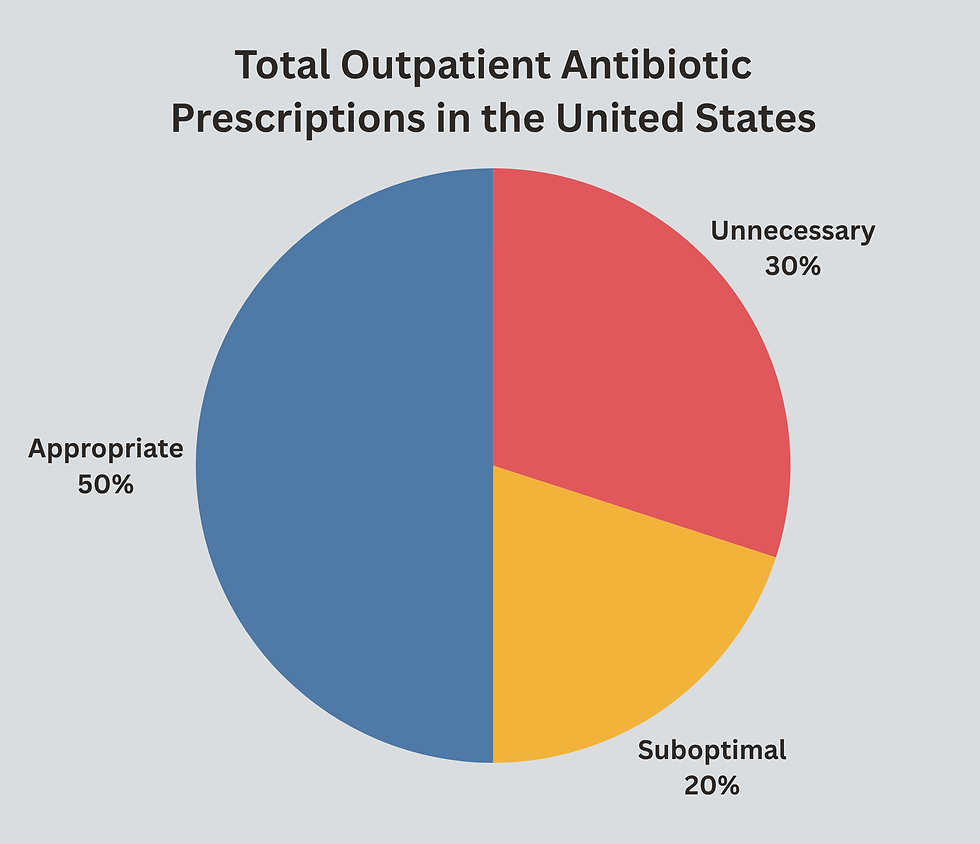
United States. The CDC suggests that roughly half of all antibiotic prescriptions are either unnecessary (about 30%) or suboptimal (around 20%) ("Antibiotic overuse"). While the data for unnecessary prescriptions is consistent across most studies, the data about suboptimal prescriptions fluctuates significantly. This may be because the subjectivity of suboptimal prescriptions makes them difficult to accurately quantify on a large scale, and because sources do not always distinguish between the precise definitions of unnecessary, suboptimal, and inappropriate. One study on the Veterans Administration healthcare system in Pittsburgh found that as many as 75% of prescriptions were inappropriate (Soucheray), but other studies cite figures as low as 30% (Timbrook et al.).
The prevalence of inappropriate prescription, and overprescription as a whole, suggests that, in a physician’s decision-making, the patient's interest in receiving antibiotics frequently overrides the broader societal interest in minimizing the dispensing of antibiotics. However, it would be too simplistic to attribute this primarily to inappropriate prioritization of patient interests over societal welfare; rather, the healthcare systems and structures they operate under can make overprescription the path of least resistance.
Patient-Centered Ethics
The generally patient-centered nature of a physician’s practice can contribute to prioritization of a patient's interest in antibiotics over concerns about antibiotic resistance. Traditionally, the ethical standard for physicians is to place their responsibilities to the individual patient above all else. Although this is not specifically required by the Hippocratic Oath, it is the well-established consensus among medical organizations and ethics institutes. For example, the American Medical Association’s Principles of Medical Ethics state that “[a] physician shall, while caring for a patient, regard responsibility to the patient as paramount” (AMA Principles of Medical Ethics). While a physician’s duty to the broader public is secondary, the AMA acknowledges its importance, stating in the AMA Code of Medical Ethics (4), “[a]lthough physicians’ primary ethical obligation is to their individual patients, they also have a long-recognized public health responsibility” (“AMA Code of Medical Ethics”). The AMA Code of Medical Ethics frequently refers to the “balance” that a physician must strike between their patient- and public health commitments, but what exactly this balance looks like and how it varies across medical specialties remains largely unclear.
(4) While the AMA Principles of Medical Ethics is a brief list of general “commandments” for physicians, the AMA Code of Medical Ethics is a much more detailed guide to physician ethics, consisting of chapters and sub-chapters.
The public health responsibility is emphasized in infectious disease professions, which are intrinsically public health-focused. In its guidelines for the ethical use of quarantine, the AMA stipulates that physicians should “support mandatory quarantine and isolation when a patient fails to adhere voluntarily,” which demonstrates a prioritization of public health over patient autonomy (“AMA Code of Medical Ethics”).
Additionally, the AMA seems to acknowledge that public health concerns are of particular importance to physicians who specialize in public health-related fields, but uses the same vaguely described “balance” language used to describe the responsibilities of all physicians: In discussing preventative care, the AMA states that “while all physicians must balance a commitment to individual patients with the health of the public, physicians who work solely or primarily in a public health capacity should uphold accepted standards of medical professionalism by implementing policies that appropriately balance individual liberties with the social goals of public health policies” (“AMA Code of Medical Ethics”).
Thus, the ways in which physicians who are greatly involved in public health must weigh societal concerns against individual concerns to an extent that exceeds that of other physicians are unclear. In practice, physicians have the autonomy to decide how to interpret these guidelines, or even whether to follow them at all. While the AMA Code of Medical Ethics is often invoked as a national standard for physician professionalism, only those who are members of the organization are obligated to subscribe to its rules.

When faced with the choice of whether or not to prescribe antibiotics, physicians can exercise their clinical judgement (expertise shaped by their experience) to determine whether or not the drugs are medically necessary, or necessary enough to outweigh the risks of contributing to antibiotic resistance or causing adverse effects in the patient (Krishnakumar et al.). Clinical judgement is not an excuse to inappropriately defy recommendations, but rather a critical component of a physician’s decision-making when every patient’s medical situation is unique (Policy Statement: Professional Autonomy).
Because these ethical codes cite a commitment to public health (albeit unclear) that must be balanced with the commitment to patient health, the ‘patient is paramount’ principle of physician professionalism does not require doctors to make prescription choices that cause harm to the public. So long as the physician is not withholding care necessary for the patient’s survival or well-being, declining to prescribe an antibiotic does not automatically violate ethical responsibilities. However, a doctor’s baseline understanding of the patient priority that is the typical headline of their role may encourage them to be more inclined to make prescription decisions at the expense of the public.
External Strains on Physician Ethics
Many external factors facilitate overprescription, such as patient expectations and healthcare structures that prioritize patient satisfaction or otherwise create suboptimal conditions for balanced physician decision-making. These factors are particularly potent in the United States, where “customer satisfaction” is often considered paramount, and overtreatment is common even when it is of little benefit to individuals and substantially harmful for the public.
Most doctors who knowingly give prescriptions that medical guidelines indicate are not appropriate cite patient expectations as the primary reason behind their decisions to do so (Giuffrida). Many ill patients, driven by anxiety about their condition, expect to leave the doctor’s office with a prescription in hand. The potentially high direct and indirect costs of a doctor’s visit, combined with the natural desire for the visit to be “worthwhile,” also contributes to a reluctance to accept the idea of leaving without a prescription. This outcome is often seen negatively, as evidence of an unproductive visit and an uncaring doctor.
Additionally, some patients who do their own online research prior to their visit may enter with strong beliefs that they need medications and about what medications they should receive. Similarly, direct-to-consumer medication advertisements have been shown to increase patient prescription requests, thereby increasing inappropriate prescriptions. In comparison with other medications, antibiotics are less commonly the subjects of these commercials, but the prevalence of these kinds of advertisements contributes to a mindset that prompts patients who do not feel well to ask for medication. Collectively, patient online research, direct-to-consumer advertising, and the overall commercialization of healthcare transforms the patient-physician relationship from a so-called “professional model” in which the patient entrusts their healthcare to an educated professional committed to acting in their patient’s best interest, to a “consumer model” in which the patient considers their healthcare to be a service where, as the customer, their desires and opinions about the treatment they’d like to receive are always correct and must be fulfilled (Franquiz et al.).
In an era when healthcare is not just a service but an industry, patient satisfaction is not simply an aspirational goal for physicians, but often a measurement of “quality of care.” Even without considering the commercial “customer is always right” mindset that is now influencing healthcare, patient satisfaction is a critical component of trust and a positive relationship between doctor and patient. However, the commercialized healthcare system overly prioritizes patient satisfaction at the cost of professional autonomy. Patient satisfaction scores are linked to physician compensation and even continuation of employment, and the pressure to achieve good scores has been proven to incentivize inappropriate prescribing (Zgierska et al.).
In many high-volume medical practices, the pressure on doctors to see as many patients as possible, as quickly as possible, means that patient visits are intentionally kept short. The short time frame of a visit may impede full and frank communication, extensive testing, and thorough evaluation of options. As a result, a doctor may not take time to explain to a patient why they will not be prescribed antibiotics, especially when convincing them that this is the appropriate choice is often difficult as is. Unfortunately, other forms of communication about when prescriptions may be inappropriate are less effective than physician-patient conversations. One study by BMC Health Services Research found that informative posters and brochures were universally ineffective in changing patient expectations about receiving antibiotics when they feel ill (Giuffrida).
The pressure for efficiency and the demands of diagnosing and treating many patients in rapid succession can produce decision fatigue, a decline in decision-making ability due to sustained repetition and mental exhaustion. Antibiotic-related decision-making is no exception; studies have shown that the average physician prescribes significantly more antibiotics towards the end of the day than at the beginning, indicating a higher likelihood of inappropriate prescription as the day wears on (Linder et al.).
The fee-for-service model many insurance companies use as a framework for physician reimbursement, especially in outpatient settings, can pressure doctors to offer unnecessary treatments ("Fee-for-Service vs. Value-Based Care"). Many physicians do not yield to these pressures, but regardless, this reimbursement model forces them to fit a lot of patients into a short time frame in order to generate earnings (Kevin). A doctor’s interest in revenue is not solely based on personal need (like paying bills and supporting their family); it is important in order to ensure that their office can continue running smoothly. Revenue considerations may be imposed by higher-ups in their healthcare system, or it may be necessary for an independent practice’s financial stability.
These difficulties are compounded by the lack of rapid diagnostic tests to determine whether an illness is viral or bacterial, and, if bacterial, to pinpoint which bacteria is the cause. This information is critical to inform prescription decision-making, and to optimize antibiotic selections and treatment plans by maximizing the elimination of the pathogenic bacteria while minimizing its exposure to antibiotics and opportunity to become resistant. Physicians often must simply form hypotheses based on patient symptoms and epidemiological trends in the community (Krishnakumar et al.). This often leads to misidentification of the responsible pathogen, which means that if it is a bacteria, the selected medication is less likely to be optimal. Because many viruses cause the same symptoms that bacteria do, viral infections are often mistaken for bacterial infections and are fruitlessly medicated with antibiotics, which cannot eliminate viruses.
Alternatively, a doctor who is mindful of the uncertainty of their hypothesis may elect to prescribe a broad-spectrum antibiotic in an effort to ensure that the bacteria they suspect may be afflicting the patient will be covered. This, too, is suboptimal. Although waiting to prescribe an antibiotic until after confirming the hypothesis with a diagnostic test is an option, doctors often prescribe antibiotics in advance because it will take time to receive test results, and they may not have or take the time to revisit the prescription question after obtaining the results (Krishnakumar et al.).
The combination of these factors produces both a healthcare system and a culture where overtreatment is normalized and there is low tolerance for non-intervention or for ‘letting things take care of themselves.’ Some doctors even fear facing litigation for underprescribing, which is not unfounded and is commonly cited as a reason behind the practice of “defensive medicine” - the general widespread practice of conducting more tests and offering more treatments than are necessary. While in-depth legal analysis reveals that underprescription lawsuits are unlikely to be successful unless the plaintiffs can show that they had serious infections that worsened and resulted in serious injury, the potential for accusation or even perception of possible malpractice deters many doctors from adhering to more stringent prescribing standards (Coleman). Aside from the legal repercussions of alleged underprescribing, many physicians fear damage to their reputations – a concern that they do not usually demonstrate for overprescribing (Reali et al.).
In this environment and culture, doctors see their role and responsibilities in the context of infectious diseases differently than details in their oaths or standard codes of ethics indicate. Studies in behavioral science have identified a multitude of cognitive biases typical of physicians, which align with the aforementioned biases of the public. Some such biases include commission bias — the preference for action over inaction – and hyperbolic discounting – the preference for small and immediate benefits over long-term benefits or avoidance of harm (Modlin). In other studies, physicians cited a desire to act benevolently as a factor behind their antibiotic prescription decisions, particularly in high-income countries. Not only did they hope to be perceived as benevolent by their patients in order to satisfy them, they also revealed in interviews that they felt a “responsibility to provide immediate therapeutic options.” When the patient’s diagnosis was uncertain, they felt even more compelled to do so, even though this meant they were more likely to give an unnecessary or suboptimal prescription (Reali et al.).
Physician ethics alone does not inevitably cause overprescription. Although the patient-first ethical responsibility is the traditional ‘headline’ of physician duties, close examination of the AMA’s medical codes reveals that it is possible to maintain loyalty to ethical standards while still electing not to prescribe antibiotics to an individual. However, the healthcare structures in place and the broader cultural beliefs distort these responsibilities and the way they are perceived by both patients and physicians alike.
Individual-Scale Ethics - Beneficence & Nonmaleficence
The most apparent ethical tension in the decision to prescribe or not prescribe antibiotics is the conflict between the bioethical principles of beneficence and nonmaleficence. By prescribing antibiotics for the benefit of their patients, physicians also harm the broader public (including their patients) by contributing to the advancement of antibiotic resistance.
Traditionally, beneficence and nonmaleficence are defined as responsibilities that a physician must uphold for their patient — to act for their benefit and to avoid causing them harm. However, as indicated in the AMA’s Code of Medical Ethics, a doctor also has a duty to uphold these principles for the public good (even if the extent to which they must do so is vague). In order to balance the patient and public concerns as a physician striving to adhere to the AMA Code of Ethics might, I will consider that a physician’s obligations to practice beneficence and nonmaleficence extend to the public as well.
First, I will discuss the medical benefits and harms produced by an antibiotic prescription, in order to lay the groundwork for discussion about what beneficence and nonmaleficence can look like in practice in an ideal situation. Then, I will factor in the accompanying consequences relating to external strains of the healthcare system to explore the realistic costs of the ideal application of beneficence and nonmaleficence, and the ways that outside pressures influence what people think it means to do benefit or avoid harm.
Medical Benefits
For a patient, the immediate benefit that an antibiotic may provide falls on a wide spectrum depending on the severity of the infection it treats, and the resistance genes, if any, that the infective bacteria possesses. These benefits can range from zero benefit at all (particularly in the case of unnecessary prescription), to relief from uncomfortable symptoms, to enabling necessary procedures, to saving lives entirely. If an antibiotic is prescribed appropriately, then there is reasonable certainty that some benefit for the patient will be realized; however, as resistance becomes widespread, this certainty is diminished.
The public may experience short-term benefit as well. First, because the patient is themselves a member of the public, a benefit experienced by the patient is technically also a benefit experienced by a fraction of the public. Additionally, curing the individual patient’s illness swiftly may prevent an outbreak of their infection in the community; however, this does not apply to all infections. Some common infections, like many in the sinus or ears, are residual impacts caused by viral illnesses but are not contagious themselves. Thus, the community benefit of avoiding an outbreak (5) is only possible in some cases.
(5) This is technically an avoidance of a harm, rather than a direct benefit; but it will be classed as a benefit for the purposes of neatly comparing the ‘good’ and ‘bad’ outcomes of an antibiotic prescription.
Medical Harms
For the patient, adverse effects are a potentially significant harm that can present and linger in both the short- and long-term. Some effects include gastrointestinal problems, which cause bloating, nausea, and other discomfort, changes in heart rhythms, organ damage, Clostridioides difficile infections, and even neurological impacts. While probabilities vary based on the details of the treatment, roughly 18% of patients who receive antibiotics from outpatient settings experience adverse effects, including a 14% of patients who experienced symptoms significant enough to warrant a change in their treatment plan (Keller et al.). In addition, antibiotic use also puts the individual patient at heightened risk of developing antibiotic resistance in their gut bacteria, which could reduce the efficacy of future courses of antibiotic treatment.
Of course, antibiotic resistance also doubles as a harm experienced by the public. The patient may be the member of the public who is likely to be most directly and immediately impacted by the possible resistance in their gut, but these impacts extend outwards as the resistance genes circulate. The transmission of these genes amongst bacterial species helps build nearly untreatable multidrug-resistant ‘superbugs’ like MRSA; as these superbugs become stronger and more widespread, they become more likely to directly affect the patient themself.
A single antibiotic prescription for the benefit of one person is very unlikely to have a drastically negative impact on the public. It is the accumulation of these prescriptions that does. Therefore, on a case by case basis, it becomes difficult to appropriately weigh antibiotic resistance as a consequence of a prescription because there is no guarantee that any single prescription will advance resistance, nor is there any way to measure how much effect it may have.
Balancing Beneficence and Nonmaleficence
Beneficence and nonmaleficence are in constant tension with one another, as the pursuit of benefit should not have disproportionate harm or risk thereof. There are ways to balance the two — minimizing harm to the public while maximizing benefit to patients.
While helping the patient by prescribing an antibiotic necessarily risks harming the general public (including the patient), there is not a proportional relationship between patient benefit and public harm. That is, after the initial decision to prescribe an antibiotic, helping the patient more does not require further harming the public, because a doctor can select a more narrow-spectrum, low dosage prescription that should be as effective as a broad-spectrum, high dosage prescription at eliminating that particular infection but contributes less to antibiotic resistance. Thus, doctors do not generally face some significant ethical dilemma in which they must choose exclusively between the health of their patient and the health of the public. Furthermore, the decision not to prescribe isn’t only backed by the interest of avoiding public harm (an antibiotic resistance crisis), which might have indicated that a doctor was prioritizing the public over their patient. Since it is in the patient’s best interest not to take unnecessary antibiotics in order to avoid adverse effects, not prescribing does not equate to rejecting the patient-first duty of the profession or to giving the public interest undue weight.
Many prescriptions in the outpatient setting also do not need to be given immediately to be effective; in many cases, returning after a few days have passed to re-evaluate an infection is also a viable option that can help ensure that incrementally increasing the risk of antibiotic resistance by prescribing an antibiotic for the patient is necessary for the patient’s recovery. Some common bacterial infections, like strep throat and some cases of sinus or ear infections, are mostly self-limiting, which means that in an otherwise healthy patient, they will naturally resolve themselves without intervention. For infections suspected to be self-limiting, a doctor may opt to monitor symptoms over time and intervene with antibiotics only if they do not improve.
Although beneficence and non-maleficence are not mutually exclusive in these situations, the tension between them remains, and it is important to examine which should take priority when maximizing one comes at the expense of the other. Considering the classic phrase “First, do no harm,” attributed to the same philosopher who created the Hippocratic Oath, non-maleficence should have greater weight in physician decision-making than beneficence. So, prudent antibiotic use, which ensures that antibiotics are only used when their benefits are greater than their harms, is the best way to appropriately resolve the competing claims of beneficence and non-maleficence.
However, the demands of patients, healthcare structures, and healthcare culture place strains on physicians that disincentivize or otherwise impede prudent prescribing, and place greater emphasis on beneficence than non-maleficence.
Practical Benefits
One major potential positive consequence physicians may experience as a result of prescribing an antibiotic to an ill patient is patient satisfaction. The public sees doctors as healers and thus many patients expect to see their doctors taking direct action to help them. Even when not prescribing or delayed prescribing is the best course of medical (in)action, it is easily misinterpreted and thus seen as a violation of a physician’s central responsibility.

Patient satisfaction has long-term ramifications as well, because a satisfied patient is more likely to develop greater trust in their healthcare providers. As a result, they may be more compliant with doctors’ orders, more communicative about personal information, and less anxious about their health, which can improve their health outcomes later on - including for future infections. It may even make them more likely to accept a subsequent decision by their doctor not to prescribe an antibiotic for a future illness. In addition, the public may also benefit if the antibiotic prescription shortens the patient’s visit, which is not only convenient for the doctor, but key in allowing them to see and treat more people.
Although personal economic benefit should not be a consideration for ethical doctors, the healthcare system may sometimes require them to consider their own self-interest in order to ensure the longevity and viability of their practice (if they run their own practice) or their employment (if they are part of a larger healthcare system). Low patient satisfaction scores and lower numbers of patients seen per day can put these at risk, disincentivizing the already difficult process of rejecting a patient’s request for medication.
Practical Harms
There are few regularly enforced logistical or financial penalties associated with antibiotic prescriptions, even inappropriate ones. Patient surveys are generally sent out shortly after a visit to capture patient feedback when it is fresh in their minds, and when they are more likely to give positive reviews (studies show that satisfaction scores decrease the longer that patients wait to give them). However, most harms associated with antibiotics, like resistance and adverse effects, are long-term harms that don’t present until far later. As a result, the best way to get high satisfaction scores is to prescribe antibiotics, even if that isn’t optimal for the patient’s long-term happiness.
The Distortion of Beneficence and Non-maleficence
From the standpoint of the financialized American healthcare system physicians operate under, the best choice is that which is the most profitable, especially in the short-term. For patients, the best choice is that which appears to them to be the most beneficial, which tends to favor the most observable and often short-term outcomes over gradual, long-term outcomes. Non-maleficence, which is less glamorized, less measurable, and less profitable than beneficence, may lack allure.
Especially when considering antibiotic prescriptions, which cumulatively have significant ramifications for the public, it becomes difficult for physicians to give adequate weight to non-maleficence for the public when their public health duties are already not clearly outlined by the AMA or other mainstream sources of medical ethics. When external influences view beneficence and active intervention as central to the physician profession, doctors themselves come to see them as such, too.
Population-Scale Ethics - Distributive Justice

The bioethical principle of justice, specifically distributive justice, is also key in the discussion of an important ethical issue: the ethical allocation of antibiotics as a scarce resource. Distributive justice refers to the fair, equitable, and appropriate distribution of healthcare resources, and can be approached in a number of ways, including by using need, contribution or merit, or complete equality as the applicable standard.
Distribution of resources according to perceived need, balanced with the likelihood that a patient will benefit from the resource, is the standard method of resource allocation in healthcare. In the emergency room, where there are more patients waiting for care than there are doctors available to deliver it, those whose medical emergencies are the most critical receive care first. In the allocation of organs for transplant, priority is given to patients whose conditions are the most urgent and life-threatening (while also considering logistical factors like proximity and biological match to the organ, which influence the potential for the transplant to be successful). When demand for ventilators exceeds the quantity of ventilators available, those who have the most critical conditions as well as the greatest likelihood of survival under a ventilator are prioritized. The vital, widely-used practice of medical triage exists for the very purpose of evaluating one’s need for care and determining the type and urgency of treatment they need when time and resources are spread thin.
Antibiotics as a Scarce Resource
However, antibiotics function differently as a scarce resource than do other scarce resources distributed based on need, like organs or ventilators.
Firstly, the scarcity concern about antibiotics, at least in most areas of the United States, does not arise out of a present-day shortage, but a concern about a future shortage of effective antibiotic treatments.The difficulty with efficacy being the limitation, not the quantity of the resource itself, is that efficacy is difficult to predict and measure. Efficacy is influenced by a wide variety of factors and fluctuates significantly based on the epidemiology and pharmacology of each pathogen-antibiotic treatment combination, as well as the makeup of the patient. Thus, conserving antibiotics in one instance doesn’t necessarily “reserve” that amount of benefit for future use. While not using a ventilator in one instance makes it available to a different patient later, withholding an antibiotic prescription today does not confer a concrete, measurable future benefit in the form of a future successful use of an antibiotic.
In most situations where an antibiotic prescription could hypothetically be denied in the interest of conservation without disastrous consequences for the patient, the antibiotic is available. It isn’t given to a patient who needs it more, it is given to nobody at all. Like the unused ventilator, it is sitting on a metaphorical (or literal) shelf, and, intuitively, it offends our sense of justice to be parsimonious in distributing a currently abundant resource, just to try to forestall a future scarcity problem.
As previously noted, some experts suggest that a scarcity disaster may not even materialize, especially if antibiotics are used sparingly. Already, scientists disagree about the extent to which antibiotic resistance is inevitable. Additionally, researchers could, in theory, make strides in discovering and developing new antibiotics in the coming years that allow progress to outpace resistance, thus circumventing a scarcity crisis. Over time, if no crisis stage is reached that is obvious and observable enough to the ‘average’ person, it will be increasingly difficult to justify to patients and doctors the continuation of such conservative distribution.
Moreover, the approach of withholding antibiotics from patients who don’t need them “enough” would present a slippery slope, because need is subjective and difficult to measure. A patient’s assessed need, and thus their chances of receiving antibiotics, can easily be influenced by a physician’s implicit biases.
Already, existing need-based allocation methods tend to favor white patients over patients of color. In the allocation of kidneys for transplant, Black patients are half as likely as white patients to be put on the transplant waitlist in the first place, and on average, they remain on the waitlist one year longer, which often decreases their chance of survival (Mullen). Similar racial disparities were evident in ventilator distribution patterns during the COVID-19 pandemic, with Black and Latinx populations being the least likely of all racial groups to receive ventilator access (Masocco et al.). Often, these inequalities in prioritization are coded into the very decision-making frameworks that evaluate need; algorithms to predict patients’ need for extra medical care tend to give white patients higher risk scores than equally sick Black patients (Jee). For situations that are not life-threatening, like many of the situations for which antibiotics may be used, need can be even more difficult to measure, and is typically evaluated not by mathematical algorithms but by individual doctors, who are also susceptible to their own biases. Relying on subjective assessments of need to determine whether or not to distribute antibiotics to a patient could easily amplify these existing disparities in healthcare.
For these reasons, the current standard of practice for physicians is to always give antibiotics to a patient who needs them in order to recover, even if their need is comparatively lesser or milder than someone else’s. As long as the patient needs the medications for whatever infection they have and isn’t likely to improve on their own, the question isn’t whether or not to distribute antibiotics, but which kind to select. In this way, antibiotic distribution is fair, equitable, and appropriate, at least for all those who have access to a doctor and are able to afford medication.
The second way in which antibiotics differ from traditional scarce resources is that the physiology of the person they are allocated to can affect how effective they might be in the future. Research suggests that occasional, low-intensity use of an antibiotic tends to have a greater impact on population-level resistance than does repeated, high-intensity use (Feldscher). In other words, giving one patient a lot of antibiotics contributes less to antibiotic resistance than giving a lot of people a single course of treatment. However, choosing to give a few patients a disproportionately high fraction of total antibiotics distributed would contradict the equitability and fairness components of distributive justice, even if it does conserve antibiotic efficacy more than any other distribution method.
The best approach to minimizing antibiotic resistance is not what is the most just. A justice-centered approach still distributes antibiotics to everyone who needs them until effective antibiotics are no longer available because antibiotic resistance has progressed too far.
It is difficult to use distributive justice to support strict rationing of antibiotics to support anticipated need in the future. If the hypothetical rationing is done well, then the scarcity wouldn’t even occur, at least for a very long time, and physicians would not be using needed resources that exist for a reason. It would be difficult to defend rationing to the public, because the “scarcity” would be occurring very gradually, almost imperceptibly to those who are not specifically tracking and researching it. Only when it becomes a catastrophe would it be easily ethically defensible.
Conclusion
Currently, we are not yet at the catastrophic stage of antibiotic resistance. Most bacterial infections can still be cured by antibiotics, even if they aren’t the same ones used in the past. Important procedures can still be performed with very low risk of infection. Because the post-antibiotic era has not yet arrived, and most experts say it is not impending (yet), physicians do not need to resort to completely withholding necessary antibiotics. Regardless, it is still critical to use antibiotics sparingly to slow the progression of global resistance. Antibiotic stewardship, defined by the CDC as “the effort to measure and improve how antibiotics are prescribed by clinicians and used by patients,” offers a promising means of keeping antibiotic resistance at bay ("Core Elements of Antibiotic Stewardship"), and, ideally averting the post-antibiotic stage entirely.
In essence, antibiotic stewardship means eliminating unnecessary prescriptions, and optimizing the remaining ones by ensuring they are as narrow in spectrum, low in dosage, and short in duration as possible while still effectively treating the target infection. By giving the patient the best opportunity to recover from their infection while still minimizing the contribution to antibiotic resistance, antibiotic stewardship allows doctors to effectively balance beneficence and nonmaleficence.
To address the milder infections that fall in the grey area between requiring and not requiring antibiotics, like sinus and ear infections, antibiotic stewardship guidelines suggest watchful waiting or delayed prescribing. To practice watchful waiting, physicians offer options for symptomatic relief while providing clear instructions for the patient to follow up with them if their infection worsens or does not improve, in which case they would then probably receive antibiotics. If follow-up is not possible, either due to time constraints for the doctor or due to logistical or accessibility barriers impeding a patient’s ability to return for re-evaluation, a delayed prescription is the next best option. The patient would leave with a postdated prescription that they are instructed to fill only if their symptoms do not improve after some predetermined period ("The Core Elements of Outpatient Antibiotic Stewardship").
Stewardship goes beyond just new guidelines for physician behavior. Antibiotic stewardship programs also often involve other members of the outpatient care center who become part of the designated stewardship team – sometimes even new specialists whose roles are entirely dedicated to ensuring that stewardship is running smoothly – that help support physicians as well as keep them accountable. People in these roles typically help monitor prescription frequencies and trends in community antibiotic resistance in order to offer physicians feedback on their prescribing habits. This feedback helps measure physician performance, in addition to patient feedback; meanwhile, patient satisfaction scores are maintained by emphasizing patient communication about the necessity of stewardship and the characteristics of their infection ("The Core Elements of Outpatient Antibiotic Stewardship").

The key element of antibiotic stewardship programs, I believe, is the simple fact that their existence in an outpatient setting requires some sort of declared commitment to prudent prescription and the implementation of specific practices or structures that promote it. Which practices and structures are adopted varies significantly across outpatient centers, but all require changes to the system and culture to reward nonmaleficence (not giving antibiotics) where beneficence (giving antibiotics) was previously prioritized. This makes it much easier for physicians to limit the prescriptions they provide.
However, whether or not stewardship is really enough to forestall a crisis remains a point of contention amongst experts. While most claim that it is absolutely vital to the sustainable management of antibiotic resistance, others claim that other actions are much more important – such as the research and development of new antibiotics, for example.
If stewardship really is the difference between the current antibiotic era and a future post-antibiotic era, there is tremendous responsibility on physicians to constantly consider the long-lasting, worldwide ramifications of every prescription decision in their daily lives – because if they fail, antibiotics will eventually fail. It is unrealistic, and arguably unfair, to require doctors to be the main people responsible for managing these grave concerns, when their occupation already demands so much of them. Healthcare professionals may be the ones ethically obligated to care for public health, but in order to truly combat resistance, everyone must do their part: governments must incentivize pharmaceutical innovation in antibiotics by providing financial support, and patients must stop demanding antibiotics that are unnecessary and adhere to treatment plans that they are given.
Stewardship is limited in its ability to help hold back a resistance because it does not yet fix all the systemic factors contributing to inappropriate prescription. For example, new insurance company reimbursement models must be used to reduce the pressures for efficiency that lead to misdiagnosis or unnecessary antibiotics. If stewardship is not enough to prevent a full-blown antibiotic resistance crisis, the day may come when doctors' beneficence and nonmaleficence may become mutually exclusive, when any further contribution to resistance via prescription must be avoided even at the expense of an individual patient’s recovery. If such a day arrives, then distributive justice must be used to determine when beneficence to the patient is most important and when nonmaleficence to the public is most important.
As antibiotic resistance grows, the public health crisis will become more dire. The large-scale nonmaleficence of not prescribing will begin to more frequently outweigh the small-scale beneficence of prescribing, and sometimes, it may be necessary to completely withhold antibiotics. But if stewardship is not enough, if it can only delay an inevitable disaster, should we really wait until the crisis becomes indubitably, inescapably tragic in order to start taking the hard line?
Works Cited
Alamer, Ali, et al. “Healthcare-Associated Infections (HAIs): Challenges and Measures Taken by the Radiology Department to Control Infection Transmission.” Vaccines, vol. 10, no. 12, 30 Nov. 2022, p. 2060, https://doi.org/10.3390/vaccines10122060. Accessed 16 Apr. 2026.
American Medical Association. “AMA Principles of Medical Ethics.” Code-Medical-Ethics.ama-Assn.org, 2001, code-medical-ethics.ama-assn.org/principles. Accessed 16 Apr. 2026.
Aminov, Rustam I. “A Brief History of the Antibiotic Era: Lessons Learned and Challenges for the Future.” Frontiers in Microbiology, vol. 1, no. 134, 8 Dec. 2010, https://doi.org/10.3389/fmicb.2010.00134. Accessed 16 Apr. 2026.
Cassidy, Emily. “Antibiotic Resistance Could Kill More People than Cancer.” Environmental Working Group, 21 Sept. 2016, www.ewg.org/news-insights/news/antibiotic-resistance-could-kill-more-people-cancer. Accessed 17 Apr. 2026.
CDC. “Core Elements of Antibiotic Stewardship.” Antibiotic Prescribing and Use, 10 May 2024, www.cdc.gov/antibiotic-use/hcp/core-elements/index.html. Accessed 15 Apr. 2026.
Centers for Disease Control and Prevention. “Outpatient Antibiotic Prescribing in the United States.” Antibiotic Prescribing and Use, 28 June 2024, www.cdc.gov/antibiotic-use/hcp/data-research/antibiotic-prescribing.html. Accessed 15 Apr. 2026.
Coleman, Carl H. “Do Physicians’ Legal Duties to Patients Conflict with Public Health Values? The Case of Antibiotic Overprescription.” Journal of Bioethical Inquiry, 2009.
Crits-Christoph, Alexander, et al. “Good Microbes, Bad Genes? The Dissemination of Antimicrobial Resistance in the Human Microbiome.” Gut Microbes, vol. 14, no. 1, 25 Mar. 2022, https://doi.org/10.1080/19490976.2022.2055944. Accessed 16 Apr. 2026.
Cs268900-A. Core Elements of Outpatient Antibiotic Stewardship 1 the Core Elements of Outpatient Antibiotic Stewardship.
“Fee-For-Service vs. Value-Based Care: What’s the Difference? - Net Health.” Net Health, 9 May 2025, www.nethealth.com/blog/fee-for-service-vs-value-based-care-what-difference/. Accessed 17 Apr. 2026.
Feldscher, Karen. “Occasional Use of Antibiotics Is More Closely Linked to Resistance than Repeated Use.” World Economic Forum, 4 Jan. 2019, www.weforum.org/stories/2019/01/widespread-occasional-use-of-antibiotics-linked-to-resistance/. Accessed 17 Apr. 2026.
Fleming, Alexander. “The Nobel Prize in Physiology or Medicine 1945.” NobelPrize.org, 2019, www.nobelprize.org/prizes/medicine/1945/fleming/lecture/. Accessed 14 Apr. 2026.
Franquiz, Miguel J., and Amy L. McGuire. “Direct-To-Consumer Drug Advertisement and Prescribing Practices: Evidence Review and Practical Guidance for Clinicians.” Journal of
General Internal Medicine, vol. 36, no. 5, 15 Sept. 2020, pmc.ncbi.nlm.nih.gov/articles/PMC8131444/, https://doi.org/10.1007/s11606-020-06218-x. Accessed 16 Apr. 2026.
Gargate, Nupur, et al. “Current Economic and Regulatory Challenges in Developing Antibiotics for Gram-Negative Bacteria.” NPJ Antimicrobial Resistance, vol. 3, no. 1, 11 June 2025, www.nature.com/articles/s44259-025-00123-1, https://doi.org/10.1038/s44259-025-00123-1. Accessed 17 Apr. 2026.
Giuffrida, Jonathan. “Waiting for Superbugs: Patient Expectations Drive Dangerous Overprescription of Antibiotics.” Chicago Policy Review, 13 Feb. 2014,
chicagopolicyreview.org/2014/02/13/waiting-for-superbugs-patient-expectations-drive-dangerous-overprescription-of-antibiotics/. Accessed 17 Apr. 2026.
Health, My Vanderbilt. “Antibiotic Overuse: 1 in 3 Antibiotics Is Unnecessary | My Vanderbilt Health.” My Vanderbilt Health, 22 Apr. 2023, my.vanderbilthealth.com/antibiotic-overuse-antimicrobial-stewardship-project/. Accessed 15 Apr. 2026.
Healthy Children. “The History of Antibiotics.” HealthyChildren.org, American Academy of Pediatrics, 15 Nov. 2019, www.healthychildren.org/English/health-issues/conditions/treatments/Pages/The-History-of-Antibiotics.aspx. Accessed 15 Apr. 2026.
Howard, Beth. “Where Are We in the Battle against Antibiotic-Resistant Infections?” AAMC, 2025, www.aamc.org/news/where-are-we-battle-against-antibiotic-resistant-infections. Accessed 13 Apr. 2026.
Huddleston, Jennifer R. “Horizontal Gene Transfer in the Human Gastrointestinal Tract: Potential Spread of Antibiotic Resistance Genes.” Infection and Drug Resistance, vol. 7, June 2014, p. 167, https://doi.org/10.2147/idr.s48820.
Hudson, O. “Four Advances Reshaping the Fight against Antibiotic Resistance.” The Washington Post, 18 Jan. 2026, www.washingtonpost.com/health/2026/01/18/fighting-antibiotic-resistance/. Accessed 16 Apr. 2026.
Jee, Charlotte. “A Biased Medical Algorithm Favored White People for Health-Care Programs.” MIT Technology Review, 25 Oct. 2019, www.technologyreview.com/2019/10/25/132184/a-biased-medical-algorithm-favored-white-people-for-healthcare-programs/. Accessed 15 Apr. 2026.
Keller, Sara C, et al. “Rates of and Risk Factors for Adverse Drug Events in Outpatient Parenteral Antimicrobial Therapy.” Clinical Infectious Diseases, vol. 66, no. 1, 17 Aug. 2017, pp. 11–19, https://doi.org/10.1093/cid/cix733. Accessed 19 May 2026.
Kevin. “Why Are Doctors in Such a Hurry?” Upperechelonmedical.com, 2023, www.upperechelonmedical.com/blog/why-are-doctors-in-such-a-hurry. Accessed 17 Apr. 2026.
Krishnakumar, Jegatha, and Rosy Tsopra. “What Rationale Do GPs Use to Choose a Particular Antibiotic for a Specific Clinical Situation?” BMC Family Practice, vol. 20, no. 1, Dec. 2019, https://doi.org/10.1186/s12875-019-1068-7. Accessed 17 Apr. 2026.
Lehtinen, Sonja, et al. “The Evolution of Antibiotic Resistance in Europe, 1998–2019.” PLOS Pathogens, vol. 21, no. 4, 3 Apr. 2025, p. e1012945, https://doi.org/10.1371/journal.ppat.1012945. Accessed 17 Apr. 2026.
Linder, Jeffrey A., et al. “Time of Day and the Decision to Prescribe Antibiotics.” JAMA Internal Medicine, vol. 174, no. 12, 1 Dec. 2014, p. 2029, jamanetwork.com/journals/jamainternalmedicine/fullarticle/1910546, https://doi.org/10.1001/jamainternmed.2014.5225. Accessed 12 Apr. 2026.
Mariya Lobanovska, and Giulia Pilla. “Penicillin’s Discovery and Antibiotic Resistance: Lessons for the Future?” The Yale Journal of Biology and Medicine, vol. 90, no. 1, 29 Mar. 2017, p. 135, pmc.ncbi.nlm.nih.gov/articles/PMC5369031/#s5. Accessed 16 Apr. 2026.
Masocco, Alexandrea MP, et al. “Does Using SOFA Score for Ventilator Triage among COVID 19 Patients Result in Suboptimal Allocation of Medical Ventilators for the BIPOC Population?” OAsis: UNLV’s Repository for Research, Scholarship, and Creative Activity, 2023, oasis.library.unlv.edu/jhdrp/vol16/iss2/5/. Accessed 30 Apr. 2026.
Michalik, Maciej, et al. “Advances and Prospects for Treatment Strategies of Drug-Resistant Tuberculosis: A Review.” PubMed, vol. 20, 1 Jan. 2025, pp. Doc33–Doc33, https://doi.org/10.3205/dgkh000562.
Modlin, Chelsea. “How to Mitigate Community Harms of Antibacterial Resistance with Patient-Centered Care.” AMA Journal of Ethics, vol. 26, no. 6, June 2024, pp. 494–501, journalofethics.ama-assn.org/article/how-mitigate-community-harms-antibacterial-resistance-patient-centered-care/2024-06, https://doi.org/10.1001/amajethics.2024.494.. Accessed 15 Apr. 2026.
Mullen, Jewel. “How Our Organ Transplant System Fails People of Color.” AAMC, 29 Nov. 2022, www.aamc.org/news/how-our-organ-transplant-system-fails-people-color. Accessed 16 Apr. 2026.
National Foundation for Infectious Diseases . “Antibiotic Resistance.” National Foundation for Infectious Diseases, NFID, 29 Aug. 2019, www.nfid.org/antibiotic-resistance/. Accessed 17 Apr. 2026.
Policy Statement: Professional Autonomy Doctors of BC Position. Dec. 2016.
Reali, Savannah, et al. “Factors Influencing Physicians’ Antimicrobial Prescribing Decisions: A Systematic Review of Qualitative Studies.” British Journal of Clinical Pharmacology, 12 Mar. 2025, https://doi.org/10.1002/bcp.70011. Accessed 17 Apr. 2026.
Sartelli, Massimo, et al. “Preventing and Controlling Healthcare-Associated Infections: The First Principle of Every Antimicrobial Stewardship Program in Hospital Settings.” Antibiotics, vol. 13, no. 9, Sept. 2024, p. 896, www.mdpi.com/2079-6382/13/9/896, https://doi.org/10.3390/antibiotics13090896. Accessed 17 Apr. 2026.
Smith, Hunter Jackson, and Chelsea Modlin. “CARB Your Enthusiasm: An Ethics-Informed Analysis for Clinicians of the US National Action Plan for Combating Antibiotic-Resistant Bacteria.” Clinical Infectious Diseases, vol. 82, no. 3, 16 Oct. 2025, https://doi.org/10.1093/cid/ciaf478. Accessed 15 Apr. 2026.
Soucheray, Stephanie. “Center for Infectious Disease Research and Policy.” CIDRAP, University of Minnesota, 3 July 2018, www.cidrap.umn.edu/antimicrobial-stewardship/va-study-shows-antibiotic-overprescribing-rule-not-exception. Accessed 17 Apr. 2026.
Timbrook, T.T., Caffrey, A.R., Ovalle, A. et al. Assessments of Opportunities to Improve Antibiotic Prescribing in an Emergency Department: A Period Prevalence Survey. Infect Dis Ther 6, 497–505 (2017). https://doi.org/10.1007/s40121-017-0175-9
Yee, Emma, et al. “Antibiotic Resistance: How to Prevent the next Public Health Emergency.” MIT Department of Biology, 25 Aug. 2020, biology.mit.edu/antibiotic-resistance-how-to-prevent-the-next-public-health-emergency/. Accessed 15 Apr. 2026.
Zgierska, Aleksandra., et al. “Impact of Patient Satisfaction Ratings on Physicians and Clinical Care.” Patient Preference and Adherence, Apr. 2014, p. 437, https://doi.org/10.2147/ppa.s59077. Accessed 16 Apr. 2026.


Comments