Fountain of Youth at What Cost? The Ethical Implications of Stem Cell Use in Cosmetics

Introduction
Across town at a research hospital, scientists work with stem cell technology to develop treatments for a child suffering from leukemia. Meanwhile, in a high-end spa in Beverly Hills, a 50-year-old woman pays around $5,000 for a stem cell facial treatment that promises to reverse aging effects. This contrast exposes concerns about how society allocates valuable resources. As stem cell technologies transfer from the research hospital to the cosmetic clinic, they enter a scene with less regulatory oversight, uncertain safety protocols, and pressures from society. This shift reveals the central ethical issue this paper explores: Is it ethically justifiable to use stem cells for cosmetic purposes, given the current unregulated system that potentially prioritizes aesthetics over health and perpetuates societal beauty standards?
While stem cells were initially researched to treat serious medical conditions, their current applications have expanded into various types of aesthetic enhancement. Stem cells have the potential to develop into different types of cells in the body. In regenerative medicine, stem cells are used to generate healthy cells to replace damaged or diseased tissue. In the cosmetic realm, stem cells have recently been used to rejuvenate skin to combat visual signs of aging, reduce scarring and hyperpigmentation, and help stimulate hair growth. However, the growing use of stem cells in cosmetics has raised several ethical concerns, particularly regarding their allocation to cosmetic vs life-saving procedures. It’s also important to consider where they come from, meaning whether they’re sourced from human tissue or a biotech process involving plants. Questions also arise about the safety of procedures and the responsibility of the patient and doctor if these procedures go wrong. There are also concerns about the risks and benefits of stem cell cosmetic procedures and the influence of societal pressures. I will be using multiple ethical values and principles, such as autonomy, fairness, safety, and beneficence, to examine these issues.
Background on Stem Cells and Their Use in Cosmetics
Stem cells can self-renew and differentiate into various functionally active cells that serve in tissues and organs. For example, they can become brain cells, heart muscle cells, bone cells, and many other cell types. Modifying and engineering stem cells has helped develop tools and therapeutics. They increase our understanding of how diseases occur, generate healthy cells to replace those affected by a disease (regenerative medicine), and test the safety and effectiveness of new drugs.
Stem cell therapy, or regenerative medicine, uses stem cells to promote the repair response of diseased or injured tissue. The stem cells are manipulated in a lab to grow into specific types of cells and then implanted into a person. Bone marrow transplantation is the most commonly used stem cell-based therapy. Blood-forming stem cells in the bone marrow have helped thousands of people who have suffered from blood cancers (NIH).
There are multiple types of stem cells:
Embryonic stem cells (ESCs), adult/somatic stem cells, induced pluripotent stem cells, and plant-derived stem cells, to name a few. ESCs are from embryos 3-5 days old (also known as the blastocyst). They are pluripotent, meaning they can divide into more stem cells or another type of cell in the body. In this paper, I will not be addressing the use of embryonic stem cells and will focus solely on the use of adult stem cells in cosmetics.
Adult stem cells are found in small numbers in most adult tissues, such as bone marrow. They are multipotent and have a more limited ability to reproduce into other cells. (Mayo Clinic)
Mesenchymal stem cells (MSCs) are a type of adult stem cell and the most common in aesthetic stem cell therapy.
Adipose-derived stem cells (ASCs) are found in fat tissue and belong to a broader category of MSCs. These fat-based stem cells have become increasingly popular for two main reasons. First, they are easier to collect through a minimally invasive procedure, and secondly, they are abundant in the body because most people have plenty of fat tissue that contains these stem cells. (Semsarzadeh, Khetarpal)
Induced pluripotent stem cells (iPSCs) are adult stem cells transformed to have the properties of ESCs. They might be able to replace the function of ESCs, but further research is needed. ESCs and iPSCs can regenerate or repair diseased tissue and organs.
Some stem cells used come from plants. They are created by taking cells from certain plants and growing them in a laboratory using special techniques (Tian, Zeyu et al). These are commonly used in stem cell cosmetic products.
Stem cells may be sourced from the same person who receives them as a treatment, or they may come from a different person. “Autologous” refers to cells that are obtained from the same person who receives them. Many cosmetic procedures involve taking a patient’s own stem cells and reinjecting them into other parts of the body. “Allogeneic” means the cell source and the patient who receives them are different. Some allogeneic stem cells are lab-grown, genetically modified, and designed for injection while retaining stem cell properties. Manufacturers supply these cells to cosmetic clinics for intensive applications, such as treating severe facial volume loss or advanced-pattern baldness. However, before these stem cells are used in practice, they should undergo clinical trials and have established regulations. This raises concerns of safety, particularly immune reactions, because of the higher risk of serious side effects (Al-Sowayan, Batla S, and Alaa T Al-Shareeda). This will be further explained in the safety and responsibility section of this paper.
Stem cells used in medical research differ significantly from stem cell extracts for cosmetic products. In cosmetic products, plant-derived stem cells are most commonly used. These plant stem cells are cultivated carefully in labs to ensure they are free from contamination and allergies, and their quality is consistent year-round, regardless of season. (Carli) Clinically-proven plant stem cells have been demonstrated to improve the body’s natural stem cell functionality and have been shown to protect against oxidative stress. This can delay the rate of aging and the need for cell replication. Although it is difficult for plant stem cells to get to the target site, only a small amount is needed to reach the target site for “outstanding visible results” (Carli). Plant-based stem cells are primarily used in cosmetic products, such as skincare products, and are not normally utilized in medical or cosmetic procedures (Trehan, Sonia et al.).
In this paper, I will be mainly focusing on cosmetic procedures involving stem cells, namely, stem cell facelifts, fat transfers, and microneedling. A “stem cell facelift” is an “anti-aging” cosmetic procedure to promote facial rejuvenation. Despite the name it is more similar to lipofilling (taking fat from one area of the body and injecting it into another) (Atiyeh, Bishara S et al.). A stem cell facelift is performed by extracting adult stem cells from the patient, normally from the abdomen (Face Lift Products). Then these stem cells are purified in a lab and are injected into the face. The main goals are to restore volume, improve skin texture, and achieve a nonsurgical facelift using stem cell-infused fat (Infini Cosmetic Associates).
Another procedure that focuses on facial rejuvenation is microneedling with stem cells, specifically ASCs. Microneedling involves using fine needles to create tiny punctures in the skin to increase collagen and elastin production. In two studies, one side of the face was treated with microneedling and a stem cell-conditioned medium, while the other side only received microneedling. The side treated with the stem cell medium showed greater improvements in wrinkles, pigmentation, pore size, and overall higher patient satisfaction compared to the other side that used no stem cell medium (Semsarzadeh, Nina, and Shilpi Khetarpal).
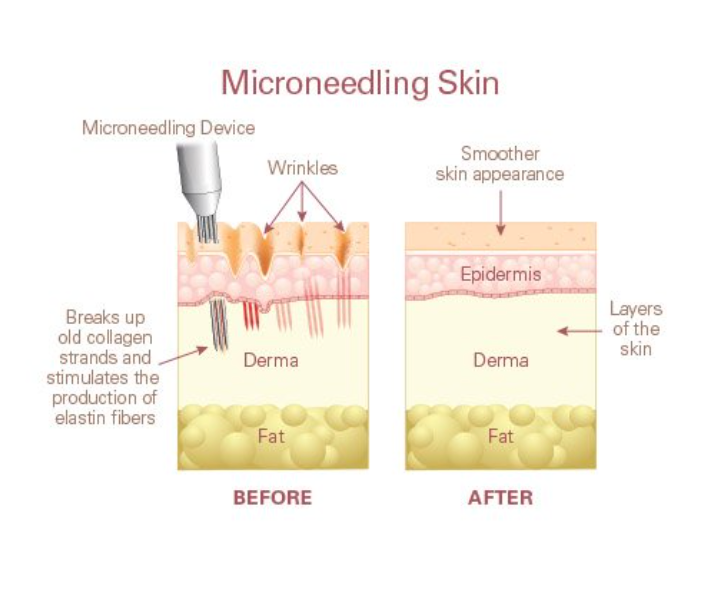
This image demonstrates a typical microneedling procedure without stem cells (Kang). The microneedling device creates tiny punctures in the skin to trigger the bod
y’s natural healing response, which stimulates fiber and collagen production.
Another potentially interesting cosmetic application is autologous fat grafting, which demonstrates both the promise and limitations of stem cell technologies in cosmetic procedures. Autologous fat grafting illustrates why stem cells have generated excitement in cosmetics despite uncertain clinical evidence about their effectiveness. ASCs can be useful in autologous fat grafting, which involves transferring fat from one part of the body to another. Autologous fat grafting is an appealing treatment for facial rejuvenation and soft tissue augmentations because no incisional scars or complications associated with foreign materials occur. However, fat grafts are often reabsorbed by the body, making the results hard to predict. To improve graft survival, a technique called cell-assisted lipotransfer (CAL) was created. It works by isolating ASCs from a portion of the extracted fat and mixing them back into the remaining fat before injection (McArdle, Adrian et al).

(A) This diagram illustrates the injection of fat into a breast. Small amounts of fat are injected in tiny portions or thin lines using a special syringe with a threaded plunger. The needle is slowly pulled back while injecting. (B) The needle can be inserted from four possible entry points: two along the edge of the areola (circular area of pigmented skin) or two spots at the breast fold. The injection is done in different directions and depths to spread the fat evenly. (Yoshimura, K., Sato, K., Aoi, N. et al).
Studies have shown promising results, such as stable breast augmentation, but the effectiveness of CAL is still up for debate. Studies have found no significant advantage for the use of stem cells over other techniques. While ASCs have great potential in aesthetic surgery, their use is still in the early stages. (Asimakopoulos, Dimitrios, and John M Anastasatos.)
For the most part, there is no adequate clinical evidence to support the marketing and promotion of stem cell procedures in aesthetic surgery. (Asimakopoulos, Dimitrios, and John M Anastasatos.) Although stem cells can offer benefits for the skin, consumers should be aware of what products and procedures they are choosing and their potential results. These gaps between marketing claims and scientific evidence raise important ethical questions that will be discussed in the following sections.
Introduction to Ethical Analysis
The ethical evaluation of stem cell use in cosmetic procedures requires us to consider the importance of scientific innovation, medical practice, societal values, and individual autonomy. The distinction between medical and enhancement applications becomes blurred, resource allocation concerns arise, and the concept of informed consent becomes complicated by marketing claims and societal pressures. This analysis will apply multiple frameworks to determine whether it is ethically justifiable to use stem cells in cosmetics. In the sections that follow, I will define and apply the four key bioethical principles in my analysis: safety (non-maleficence), resource allocation (justice), autonomy, and beneficence. Using these principles will help me evaluate specific cosmetic procedures and provide a stronger foundation for policy recommendations and future research.
Non-Maleficence: Exploring Procedure Safety and Examining Operator Responsibility
While established cosmetic procedures have clear medical standards of care that facilitate accountability when outcomes fail, newer procedures like stem cell treatments operate in a gray area. In a 2023 Washington case, a jury awarded $13 million to a patient after finding that Dr. Kristane Brecht violated the standard of care during cosmetic procedures by failing to warn the patient about diabetes-related risks and removing excessive skin that caused permanent disfigurement (Ryskamp). The jury’s ability to determine negligence relied on established professional standards for cosmetic surgery procedures. In contrast, stem cell-based cosmetic procedures lack these frameworks. In United States v. US Stem Cell Clinic (2021), federal courts struggled to regulate stem cell treatments because no clear standards of care existed. The clinic operated outside of FDA approval, making it difficult to determine what was considered proper practice versus negligence (Igra and Marden). This uncertainty left patients vulnerable to unproven treatments with little protection from harm.
While early data from 2012 suggested few adverse effects in short-term studies of ASC treatments, with no major complications reported among 14 published cases and 121 clinical trial participants (McArdle, Adrian et al), these findings are limited in scope and length. The first clinical trials using adipose-derived stem cells began in 2005 (Toyserkani), meaning that by 2012, even the longest studies provided less than seven years of safety data. More concerning, long-term cancer risks remain even less understood. In laboratory settings, cultured adipose stem cells have demonstrated the potential for malignant transformation, with one study documenting tumor formation in 50% of test subjects (Rubio). A 2017 review stated that while stem cell therapy showed a “favorable safety profile,” the quality of safety assessments has “been of poor quality” and warned that “only adverse events that are looked for will be found” (Toyserkani). This highlights the need for standardized protocols and long-term safety monitoring. Without established guidelines for optimal cell dosage, processing methods, and patient follow-up (American Society of Plastic Surgeons), both immediate and long-term risks remain largely unknown.
The direct marketing to consumers of stem cell products and procedures creates serious concerns about patient safety and misleading claims. Claims of anti-aging, skin regeneration, and dramatic improvements in appearance create an expectation of flawless, youthful skin and should be scrutinized and questioned. These advertisements are not always true and can be exaggerated or misunderstood by consumers. One study found that over 80% of cosmetic product claims were untruthful, including endorsement claims (“recommended by a dermatologist”), scientific claims (“clinically proven”), and environmental claims (“no testing on animals”) (Dockrill). Many businesses specifically market stem cell-based products and procedures directly to consumers. Some falsely claim that they use stem cells. Others use stem cells, but may falsely claim clinical proof or proper regulation.
Since mammalian stem cells, especially from donors, are biological products, they must be handled with caution. To ensure safety and effectiveness, strict regulations are needed. Laboratories preparing stem cells should meet high standards, and clear manufacturing protocols must be followed. Each procedure and application should undergo a clinical trial to confirm its benefits and risks. Providers must avoid harming and misleading consumers with unproven claims. The downside of this measured approach is that patients become impatient with clinical trials and seek solutions outside of the country or illegally (Al-Sowayan, Batla S, and Alaa T Al-Shareeda).
The lack of oversight in stem cell cosmetics is part of a larger issue in the beauty industry. Procedures are frequently introduced to the market before adequate clinical testing in the cosmetic industry because of regulatory gaps and the industry’s fast pace. Companies often promote trending products, even if unproven, to stay popular. (Dockrill) Consumers need to be informed of these gaps and understand what the lack of regulatory approval may suggest. For example, a procedure could be safe but not necessarily effective. Educating consumers on regulations can encourage them to report adverse outcomes and potential malpractice to improve the safety and transparency of the industry.
Clear standards and protocols must be established for the safety of the patient. False and unproven claims can hurt people. Clinical trials should be required before a patient undergoes a certain procedure. Consumer education, like legislation and more research, is important to help consumers recognize potential malpractice and false advertising (Al-Sowayan, Batla S, and Alaa T Al-Shareeda).
With all this in mind, who should be held accountable when a procedure does go wrong?
In Carla’s case, above, it seems fairly clear that the surgeon(s) would bear the responsibility for complications in the breast augmentation procedure resulting from their decisions about how large and where to make the breast pocket. However, when stem cells are used in cosmetic procedures, who should be held responsible can be unclear, especially when procedures are new or have not been tested. It is the duty of professional medical associations and researchers publishing studies, who offer these procedures and specialize in these fields, to educate the public about the advantages and disadvantages of any new scientific advancement or proposed theory (McArdle, Adrian et al). To assess the education of an individual patient in the office, doctors can offer pre-/post-consultation comprehension tests to measure understanding of risks, benefits, and alternatives. The patient should be able to explain the procedure to the provider, and follow-up surveys can be sent to patients to see what they remember and understand weeks after consultation.
When patients lack adequate understanding, particularly regarding unproven procedures, the responsibility can fall on the clinic and its practitioners. As trained experts in their fields, doctors have a professional obligation to provide evidence-based information rather than overstating potential benefits that can compromise the trust of the patient and their safety (McArdle, Adrian et al). For example, there is still uncertainty regarding the ability of ASCs to develop into specific cell types. In some countries outside of the United States, non-autologous cells can be used, which could lead to immunologic consequences (McArdle, Adrian et al).
Although the responsibility for providing evidence-based care largely depends on medical professionals, patients also have important responsibilities in making informed healthcare decisions. In particular, it can be argued that patients bear responsibility for their choices when they engage in medical tourism to seek cosmetic procedures that lack regulatory approval or oversight in their home country. Patients are often motivated to bypass established medical guidelines in their home countries for various reasons, such as lower costs, short wait times, and access to experimental treatments not yet available domestically. Some might say that patients knowingly assume risks when they pursue treatments without FDA approval or equivalent regulatory oversight, undergo procedures in facilities that may not meet established safety protocols, and trust practitioners who may not have verified credentials under recognized medical licensing systems. A subset of these patients may try to investigate potential international providers to make informed decisions. However, this may be complicated by the fact that some clinics purposefully advertise false or misleading results. This creates a situation where patients attempting to make responsible healthcare decisions must grapple with deceptive marketing practices from international clinics.
The FDA has responsibility for regulation of stem cell therapies. The FDA introduced the Regenerative Medicine Advanced Therapy (RMAT) designation to support rapid development of promising stem cell therapies. From 2017-2025, over 340 requests were received and 167 RMAT designations were granted (FDA). The FDA’s enthusiastic implementation of the RMAT program causes concern for patient safety by making it easier for certain therapies to receive accelerated approval. These treatments receive accelerated approval when there’s a high need for a treatment for a serious condition with limited options, even without full clinical proof of effectiveness. In other words, it increases access to cosmetic treatments, but do the potential benefits outweigh the unknown risks? Without full clinical trials, long-term consequences cannot always be accurately predicted, and there can be serious risks associated. It is important to keep a balance between supporting legitimate scientific progress while also enforcing strict oversight to prevent unsafe treatments from reaching patients (Knoepfler).
The FDA also assumes some responsibility for the truthful and non-misleading promotion of stem cell therapies. The FDA has taken legal action against for-profit clinics marketing unapproved and potentially unsafe stem cell interventions. Notably, lawsuits were filed against firms like the California Stem Cell Treatment Center and U.S. Stem Cell, Inc., aiming to halt their operation.
The question of patient versus provider versus agency responsibility highlights another fundamental issue about the priorities in stem cell research and application that will be discussed in the next section.
Fairness and Justice of Resource Allocation and Patient Autonomy
A central ethical dilemma in stem cell technology lies in resource allocation: Is it fair to prioritize stem cell resources for cosmetics vs people who need them for life-saving medical uses? This section examines how we might ethically justify or challenge the distribution of limited stem cell technologies between aesthetic applications and critical medical interventions where lives are at stake. Currently, the demand for transplantable tissues and organs exceeds the available supply, creating a critical medical need. Stem cells could provide a solution to this shortage. Additionally, adult stem cells, which are mainly used in cosmetics, are only found in small numbers in each tissue, and once harvested, have a limited capacity for division. This makes it difficult to generate the large quantities needed for therapeutic applications (National Institute of Health). There has been progress toward some potential solutions to this problem, like pluripotent stem cells in regenerative medicine and plant stem cells in cosmetics. While these solutions address some technical challenges, ethical concerns still exist about resource allocation priorities. Can the cosmetic use of a scarce resource be justified when the demand for therapeutic use cannot be effectively met?
Exploration of this issue calls for consideration of two contrasting viewpoints. The first argues that it is not fair to prioritize stem cell resources for cosmetics compared to life-saving medical procedures. Medical procedures are a necessity for some people suffering from a disease or coping with injury from an accident. For them, these procedures could be the difference between life and death. In contrast, cosmetic surgeries, most of the time, are not necessary for people (unless they are reconstructive surgeries). The use of stem cells for reconstructive procedures might be considered “fairer” because, in reconstructive surgery, doctors restore a function that previously existed. They do not enhance a feature that may not need fixing. In addition, people seeking cosmetic changes may be able to choose among multiple treatment options - including options that do not involve using stem cells. There may not be as many options for people who need stem cell therapy for medical purposes.
The second perspective holds that everyone has their own autonomy and has the right to make decisions about their body and what procedures they want to undergo. If stem cell technologies are available and legally approved for cosmetic use, denying individuals the right to access them based on a subjective hierarchy of needs could be an infringement on their freedom of choice. Furthermore, “medical necessity” can be subjective, and “life-saving treatments” are not always clearly identifiable. Psychological and mental well-being are also important aspects of health. Aesthetic treatments can improve self-esteem and quality of life, which can positively impact mental health enough to essentially ‘save’ someone.
Additionally, increasing interest in cosmetic uses of stem cells could generate more innovation and investment in stem cell research in general. Revenue gathered from cosmetic applications could eventually fund further research that benefits life-saving treatments. Similarly, the advancement of stem cell cosmetic procedures could lead to a breakthrough that benefits both the medical and cosmetic fields. However, cosmetic uses should not preclude use for critical medical treatments, but instead, they should advance the field as a whole.
The allocation of scarce stem cell resources poses an ethical dilemma. The stem cells that someone wants to use to enhance their appearance could also be used in medical treatments that could make the difference between life and death. Reconstructive surgery is a category of cosmetic use that might be considered “fairer” or more appropriate because the doctor is restoring a function that already existed. However, some might say that what is considered “medically necessary” can be unclear or arbitrary. Stem cell cosmetics can help with advancements in the overall field, but not at the expense of patients’ safety (Knoepfler). While resource allocation raises questions about fairness between aesthetic enhancement and medical necessity, it also connects to broader concerns about patient autonomy and the distinction between desperate medical choices and elective cosmetic decisions.
Examining Motives and Outcomes of Procedures Through Beneficence
A critical ethical consideration in evaluating stem cell cosmetic procedures is whether they genuinely enhance patients’ overall well-being and/or merely respond to problematic social pressures. Do these procedures actually improve the quality of life for patients, or do they simply make people feel better temporarily because they help them conform to society’s often unrealistic beauty standards? These procedures raise profound questions about autonomy and authentic choice, which will be further discussed in this section.
Are we respecting individual freedom, particularly for women, who face unfair appearance-based judgment when we support their decisions to pursue such procedures? Or are we promoting an environment that establishes increasingly unattainable beauty standards through the medicalization of appearance? This section explores the complex factor of societal influence and the true meaning of beneficence in cosmetic stem cell applications.
Studies have shown that many patients are satisfied with their outcomes and have improvements, specifically in their body image. Some studies show improvements lasting over five years post-surgery. While cosmetic procedures consistently improve body image satisfaction, the effects on overall mental health and psychological well-being vary and depend on individual factors, such as pre-existing mental health conditions and realistic expectations (Kam et al). Consequently, these procedures present a contradiction: they improve individual patients’ body image while potentially reinforcing harmful beauty standards.
One key ethical consideration is whether temporary aesthetic improvements promote long-term wellbeing and quality of life, especially when many benefits require ongoing treatments to maintain results. Promises of “perfect,” never-aging skin through biotechnology can deepen societal pressures to maintain a youthful appearance forever. For example, microneedling requires regular maintenance, causing individuals to undergo this procedure many times and have to constantly confront this decision. This challenges us to examine whether these treatments address the root causes of appearance-related distress or merely offer temporary solutions to deeper societal issues.
The increasing use of cosmetic procedures can normalize the medicalization of aging and create a societal obligation to “treat” aging regardless of health implications. This also connects to deeper questions about the societal forces that influence cosmetic decisions.
When evaluating stem cell cosmetic procedures, a tension arises between autonomy and challenging “ableist” beauty standards: How do we navigate the balance between supporting individual choices to conform to current aesthetic norms versus challenging those norms to create a more inclusive society that accepts diverse appearances, particularly when these norms may reflect ableist assumptions about how bodies "should" look?
People should have the right to make decisions about their bodies, including pursuing aesthetic procedures that may make them feel more comfortable and confident. For individuals with disabilities, scars, or hair loss from medical conditions, these procedures are not just about aesthetics but also about regaining power over their bodies. However, true autonomy comes from choices being freely made without influence or pressure from society. Many beauty standards are embedded in ableist views, which favor youth, symmetry, smooth skin, full hair, and “ideal” body proportions. To individuals with disabilities, scars or differences in appearance, especially when they are the result of circumstances beyond their control, these standards can reinforce the idea that certain people are less valued if their appearance doesn’t conform to societal standards for attractiveness. While aesthetic procedures may be chosen for personal reasons, it is important to challenge societal norms and unconscious biases that motivate these decisions. To do this, there needs to be more media representation and normalization of nontraditional aesthetics. The cosmetic and medical fields should not exploit patient insecurities fueled by ableist standards. They should provide clear, evidence-based information about procedures rather than marketing them as a way to gain social acceptance.
Conclusion
This paper has examined the ethical implications of using stem cells in cosmetic procedures through multiple ethical principles and values. I explored how stem cells, initially researched for treating serious medical conditions, have expanded into aesthetic enhancement and how this has raised important ethical questions. The analysis included several key considerations with safety, responsibility, resource allocation, beneficence, autonomy, and societal views.
For safety and responsibility, the current lack of standardized protocols and regulatory oversight in stem cell cosmetics creates potential risks for patients. While initial data suggest minimal adverse effects, the lack of clear guidelines and the tendency to offer procedures before adequate clinical testing remain problematic.
Resource allocation raises questions about fairness in distributing stem cell technologies between life-saving medical procedures and aesthetic enhancements. This tension highlights the challenge of balancing individual autonomy with considerations of social justice and equitable access to healthcare innovations.
Examining the outcomes of these procedures through the bioethical principle of beneficence reveals a complex picture. While some patients report satisfaction and improved self-esteem, these procedures may simultaneously reinforce harmful beauty standards through exaggerated marketing claims and the medicalization of natural aging processes. This raises broader questions about how we might support individual choices while creating a more inclusive society that accepts diverse appearances.
After evaluating the evidence and applying various ethical principles and values, I conclude that the ethical status of stem cells in cosmetic applications depends on the particular context and method of use. For cosmetic products using plant-derived stem cells, I believe the practice is ethically justifiable. These applications appear sustainable, have demonstrated safety in available research, and involve minimal invasiveness. The environment and bodily effects appear more limited compared to other cosmetic technologies involving stem cells.
However, for cosmetic procedures using human stem cells (particularly those involving adipose-derived stem cells or other autologous/allogeneic cells), I find the current practices to be ethically problematic. The lack of standardized protocols, insufficient clinical trials, inadequate regulatory oversight, and potential exploitation of patient vulnerabilities all contribute to my decision. I do see the potential that these procedures can have in the future with more research, but, as of right now, the safety concerns outweigh the potential benefits. The majority of the time, cosmetic procedures are not life-saving, so there should not be accelerated approval of them. Until proper standards are established, enough clinical evidence is gathered, and transparent consent processes are implemented, these procedures remain questionable.
To address the ethical concerns identified in this paper, several policy interventions are necessary to ensure the safety of the patient while also maintaining the effectiveness of the procedure. The FDA should establish clear guidelines specifically for stem cell cosmetic procedures for plant-based stem cell products and procedures using human stem cells.
They should also require mandatory clinical trials for all stem cell cosmetic procedures before market approval and create standardized protocols for extracting, processing, and applying stem cells in cosmetic settings. They can also encourage medical professional organizations to develop specialty guidelines for cosmetic stem cell applications and establish continuing education requirements for practitioners in this rapidly evolving field.
The ethical complexities revolving around stem cell use in cosmetics reflect bigger problems we face with new medical technologies. Medical innovations often move from treating serious diseases to enhancing appearance faster than we can create proper rules or think through the consequences. They raise questions like whether we’re solving real problems or creating new societal pressures to the ever-growing list. As we develop more powerful ways to assist in medicine, we need equally strong systems and regulations for not just what we can do, but what we should do. While some of these procedures may seem insignificant now when compared to cancer treatment, how we handle these smaller issues will set a precedent for how we approach bigger biotechnology issues in the future.
Works Cited
Al-Sowayan, Batla S, and Alaa T Al-Shareeda. “Stem cells and the pursuit of youth, a tale of
limitless possibilities and commercial fraud.” World journal of biological chemistry vol.
12,4 (2021): 52-56. doi:10.4331/wjbc.v12.i4.52. Accessed 19 February 2025.
Asimakopoulos, Dimitrios, and John M Anastasatos. “Cell-Assisted Lipotransfer in Breast
Augmentation Surgery: Clinical Outcomes and Considerations for Future Research.”
Cureus vol. 14,3 e22763. 2 Mar. 2022, doi:10.7759/cureus.22763. Accessed 2 April 2025.
Atiyeh, Bishara S et al. “Stem cell facelift: between reality and fiction.” Aesthetic surgery
journal vol. 33,3 (2013): 334-8. doi:10.1177/1090820X13478944. Accessed 27 May 2025.
“Blood Stem Cell Donation - NCI.” National Cancer Institute, 4 October 2023,
-stem-cells. Accessed 16 May 2025.
Carli, Belinda. “Getting to the Root of the Matter: Stem Cells in Cosmeceutical Products.”
ULTRUS Prospector Knowledge Center, UL LLC, 10 February 2017,
~:text=Stem%20cells%20for%20cosmetic%20products,%2C%20pollution%2C%20or%2
0seasonal%20variation. Accessed 1 April 2025.
Carli, Belinda. “Stem cells in cosmetic formulas: a sustainable innovation.” In-Cosmetics
Connect, Reed Exhibitions, 16 August 2023, https://connect.in-cosmetics.com/formulation/
stem-cells-in-cosmetic-formulas-a-sustainable-innovation/. Accessed 2 April 2025.
“Case Study: £15,000 for Negligence Suffered.” Cosmetic Surgery Solicitors,
Accessed 16 May 2025.
Castle, David J et al. “Does cosmetic surgery improve psychosocial wellbeing?.” The Medical Journal of Australia vol. 176,12 (2002): 601-4. doi:10.5694/j.1326-5377.2002.tb04593.x. Accessed February 15 2025.
“Cumulative CBER Regenerative Medicine Advanced Therapy (RMAT) Designation Requests
Received by Fiscal Year.” FDA, 31 March 2025, https://www.fda.gov/vaccines-blood-biologics/cellular-gene-therapy-products/cumulative-cber-regenerative-medicine-advanced-therapy-rmat-designation-requests-received-fiscal. Accessed 28 May 2025.
DeAngelis, Jenna. “Queens cosmetologist arrested for administering injections she wasn't
licensed to give.” CBS News, 5 February 2025, https://www.cbsnews.com/newyork/news/
queens-cosmetologist-arrested-botox-fei-min-princess-beauty-inc/. Accessed 21 February 2025.
Dockrill, Peter. “Over 80% of Cosmetic Product Claims Are Untruthful, Study Finds.” Science
Alert, 29 July 2015, https://www.sciencealert.com/over-80-of-cosmetic-product-
claims-are-untruthful-study-finds. Accessed 16 May 2025.
“Evidence-Based Clinical Practice Guidelines.” American Society of Plastic Surgeons, 2025,
practice-guidelines#:~:text=This%20evidence%2Dbased%20guideline%20was,procedure
s%20and%20follow%2Dup%20assessments. Accessed 28 May 2025.
FaceLiftProducts. “Stem Cell Face Lift.” Face Lift Products, 2 April 2011,
http://www.faceliftproducts.org/stem-cell-face-lift/. Accessed 27 May 2025.
“FAQ – AnteAGE.” AnteAGE, 2025, https://anteage.com/pages/faq. Accessed 16 February 2025.
Gallo, Kim. “Unlocking the Power of Stem Cells in Skincare: A Comprehensive Guide.” Kim
Gallo Esthetics, 16 September 2024, https://kimgalloesthetics.com/blog/stem-cells-skincare. Accessed 26 April 2025.
Igra, Naomi, and Emily Marden. “United States v. U.S. Stem Cell Clinic, LLC.” Food and Drug
Law Institute, 2025, https://www.fdli.org/2022/06/united-states-v-u-s-stem-cell-clinic-llc/. Accessed 1 February 2026.
Kam, Olivia et al. “The Psychological Benefits of Cosmetic Surgery.” The Journal of nervous
and mental disease, 2021. https://www.researchgate.net/publication/355887704_
The_Psychological_Benefits_of_Cosmetic_Surgery. Accessed 15 February 2025.
Knoepfler, Paul S. “Too Much Carrot and Not Enough Stick in New Stem Cell Oversight
Trends.” Cell Stem Cell, 1 ed., vol. 23, 2018, pp. 18-20. Science Direct,
Accessed 2 April 2025.
Mayo Clinic Staff. “Stem cells: What they are and what they do.” Mayo Clinic, 23 March 2024,
/art-20048117. Accessed 2 March 2025.
McArdle, Adrian et al. “The role of stem cells in aesthetic surgery: fact or fiction?.” Plastic and reconstructive surgery vol. 134,2 (2014): 193-200. doi:10.1097/PRS.0000000000000404.
Accessed 19 February 2025.
“Microneedling.” John Kang MD F.A.C.S, 2019, https://johnkangmd.com/microneedling/.
Accessed 27 May 2025.
Rubio, Daniel et al. “Spontaneous human adult stem cell transformation.” Cancer research vol. 65,8 (2005): 3035-9. doi:10.1158/0008-5472.CAN-04-4194. Accessed 1 February 2026.
Ryskamp, Dani Alexis. “$13 Million Verdict in Plastic Surgery Malpractice Case.” Expert
Institute, 4 October 2023, https://www.expertinstitute.com/resources/insights/13-million-verdict-in-plastic-surgery-malpractice-case/. Accessed 1 February 2026.
Semsarzadeh, Nina, and Shilpi Khetarpal. “Rise of stem cell therapies in aesthetics.” Clinics In Dermatology, vol. 40, 2022, pp. 49-56. Science Direct, https://www.sciencedirect.com/
science/article/pii/S0738081X21001681?via%3Dihub#section-cited-by. Accessed 20 February 2025.
Shahbaz, Ali. “Skin Care Ingredient Focus: Stem Cells.” Westlake Dermatology, 15 April 2023, https://www.westlakedermatology.com/blog/stem-cells-for-skin-care/. Accessed 21
February 2025.
“Stem Cell Therapy for Face Lift: Myths vs. Reality Unveiled.” Liposuction Scottsdale, AZ, 31
May 2024, https://www.infiniskin.com/blog/stem-cell-therapy-for-face-lift/. Accessed 27
May 2025.
Tian, Zeyu et al. “Introduction to stem cells.” Progress in molecular biology and translational
science vol. 199 (2023): 3-32. doi:10.1016/bs.pmbts.2023.02.012. Accessed 2 April
2024.
Toyserkani, Navid Mohamadpour et al. “Concise Review: A Safety Assessment of
Adipose-Derived Cell Therapy in Clinical Trials: A Systematic Review of Reported
Adverse Events.” Stem cells translational medicine vol. 6,9 (2017): 1786-1794.
doi:10.1002/sctm.17-0031. Accessed 1 February 2026.
Trehan, Sonia et al. “Plant stem cells in cosmetics: current trends and future directions.” Future science OA vol. 3,4 FSO226. 12 Jul. 2017, doi:10.4155/fsoa-2017-0026. Accessed 2
April 2025.
Yabut, O., and HS Bernstein. “Stem Cell Basics | STEM Cell Information.” NIH Stem Cell
Information, 1 February 2021, https://stemcells.nih.gov/info/basics/stc-basics. Accessed
27 May 2025.
Yoshimura, K., Sato, K., Aoi, N. et al. Cell-Assisted Lipotransfer for Cosmetic Breast
Augmentation: Supportive Use of Adipose-Derived Stem/Stromal Cells. Aesth Plast Surg
32, 48–55 (2008). https://doi.org/10.1007/s00266-007-9019-4. Accessed 2 April 2025.
Comments